




#ISSUE12
2022.08
Baby Sea Turtles Going for a Swim! The Staff Members of Kamogawa Sea World Watch the Journey Begin
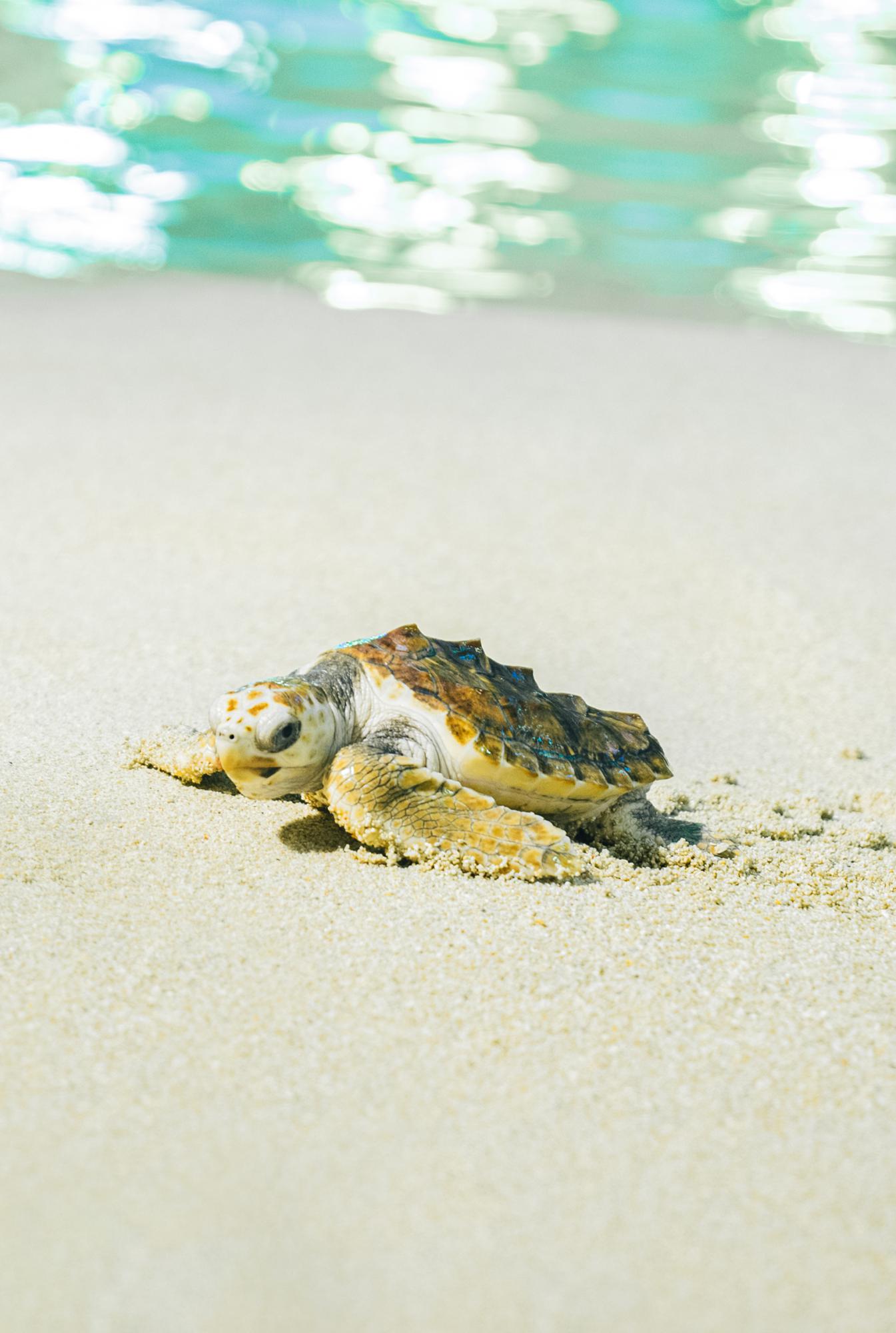
Every year since 2002, the staff members of Kamogawa Sea World have watched over the spawning of wild loggerhead sea turtles on the beaches of Kamogawa City. The eggs are found and carefully protected, following the tracks left behind. The babies eventually hatch, flop onto the beach, and head for the sea to start their journey
#ISSUE12
2022.08
01 The Sea Turtles Are Here Again This Year!
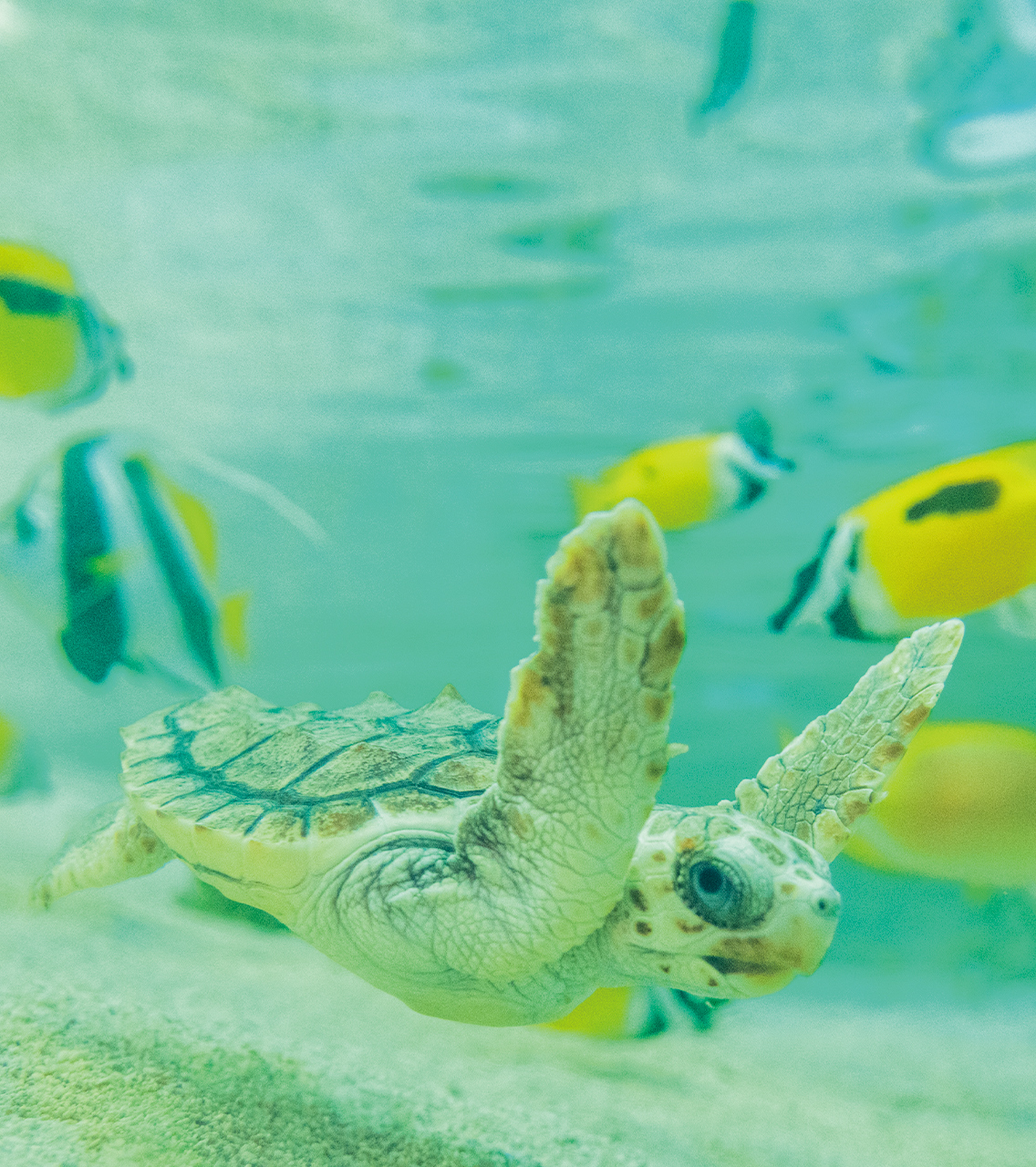
Kamogawa Sea World is the flagship facility of GRANVISTA Hotels & Resorts in Chiba Prefecture. Right in front of the resort is Tojo Beach, where wild loggerhead seas turtles come to lay their eggs between July and August.
“Female turtles lay their eggs several times during a season, at intervals of two to three weeks,” reveals Tomonori Yoshimura, head of the fish exhibit. Yoshimura has been overseeing the spawning of loggerhead sea turtles in the wild at Kamogawa Sea World for nearly two decades.
“The number of turtles landing on Tojo Beach is decreasing every year. Factors such as global warming, which causes sandy beaches to become smaller and smaller due to the rise in sea level, are thought to contribute to this trend. Every year, I look around the beach, anxiously wondering if they will come.”
On July 17, 2022, a little later than usual, the staff finally confirmed the first spawning at Tojo Beach. Everyone was relieved.
02 Caterpillar-like Footprints Are a Sign: Searching for Eggs “With the Feeling of a Mother Turtle”
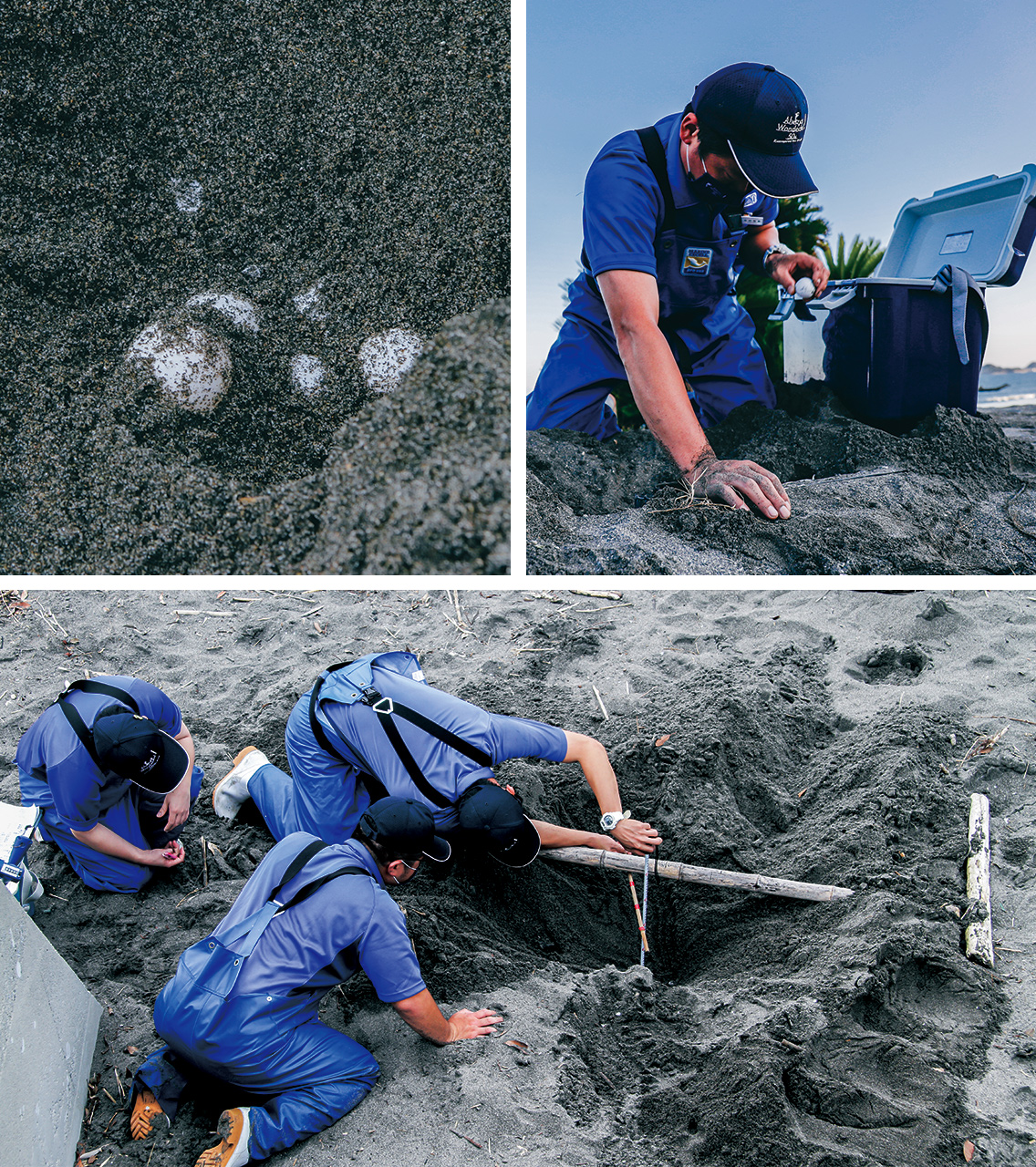
The loggerhead sea turtle conservation program at Kamogawa Sea World began in 2002 with the making and opening of Sea Turtle Beach, a special lot of sand that would allow for spawning on the museum’s grounds. Eggs laid in surrounding areas likely to be flooded by heavy rains or typhoons are protected by staff members and moved to the Sea Turtle Beach. Eggs laid in places where there are no problems with hatching are fenced off and watched over together in collaboration with locals.
But how do you look for sea turtle eggs in the sand?
“During the egg-laying season, our staff patrols the beach looking for footprints that closely resemble the tracks of a caterpillar,” says Yoshimura. “If there is a hollow (body pit) of one to two square meters at the end of a track, there is a good chance that it is a nest. We then use our experience and intuition to carefully shovel sand by hand and dig up the eggs.”
A square meter or two is roughly the size of a tatami mat. Since only a small portion of the area contains eggs, staff members are taught to search for them “as if they were a mother turtle.” The eggs are carefully reburied. They are not to flipped or turned, as this a change in positioning could cause abnormal development and hatching.
03 “We want to return the hatchlings to the sea”: Staff Members Stay up All Night to Watch Over the Emergence
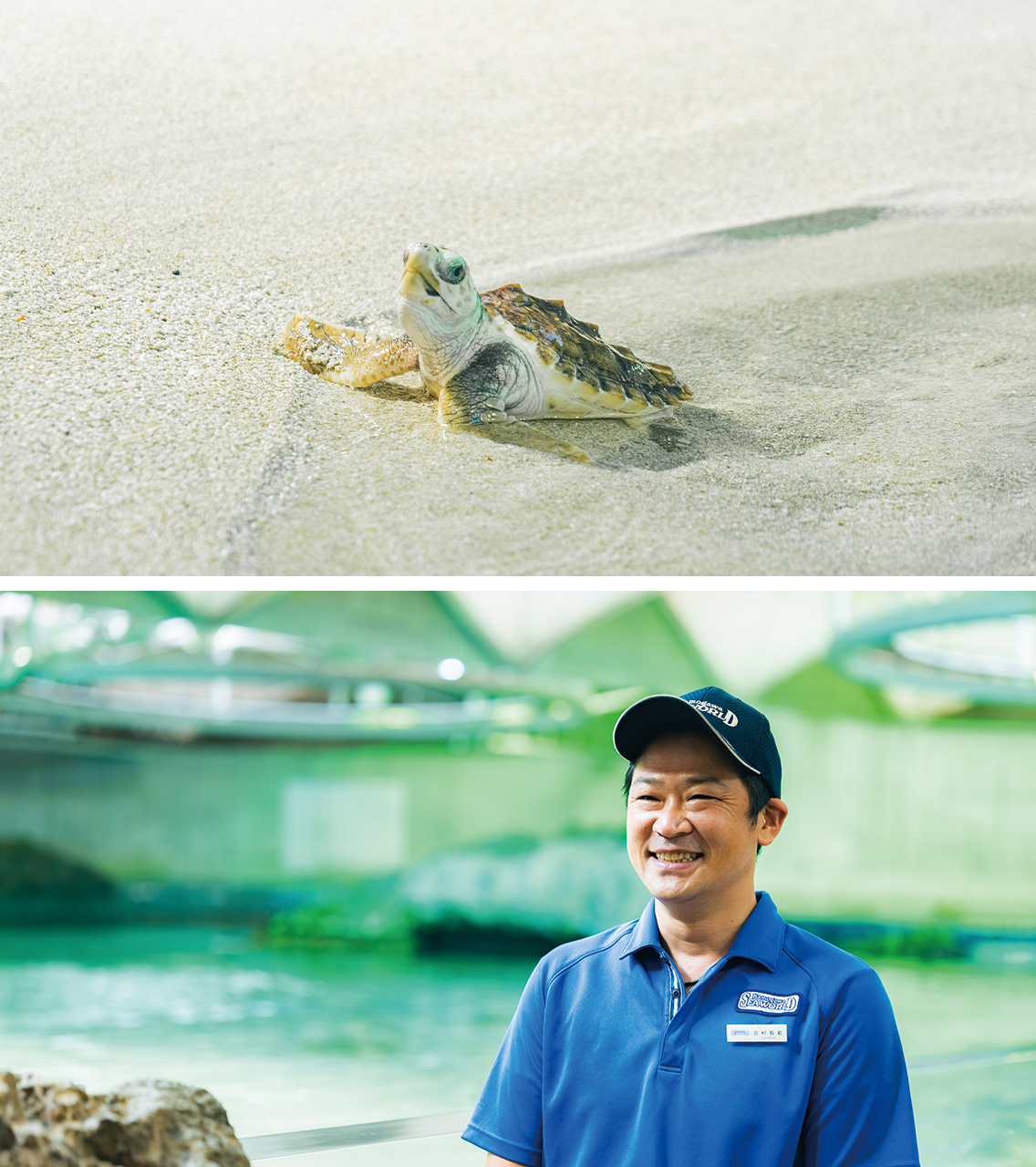
"When the baby turtles break out of their eggs in the nest, it is called ‘hatching’, and when they make their way out of the sand, it is called ‘emergence’. The hatching period is about 50 days. By measuring the temperature of the sand every day, we can predict the approximate hatching date. Currently, we are conducting research to further improve the accuracy of this prediction,” says Yoshimura.
It is known that after hatching, the baby turtles take two days to emerge from the nest. Thus, if the staff members can accurately predict the time of hatching, it may be possible to also predict the date and time of the babies’ emergence.
“For now, when the day of hatching is near, staff members stay up all night to observe the hatchlings. This is because we want to return the hatchlings to the sea as soon as possible,” says Yoshimura. “If the ‘emergence time’ can be accurately predicted, the burden on these staff members will be reduced, and announcements can be made to visitors to the museum, who could then be able to witness the precious moment.”
04 Riding the Kuroshio Current to the Pacific Ocean! The Great Adventure of the Hatchlings
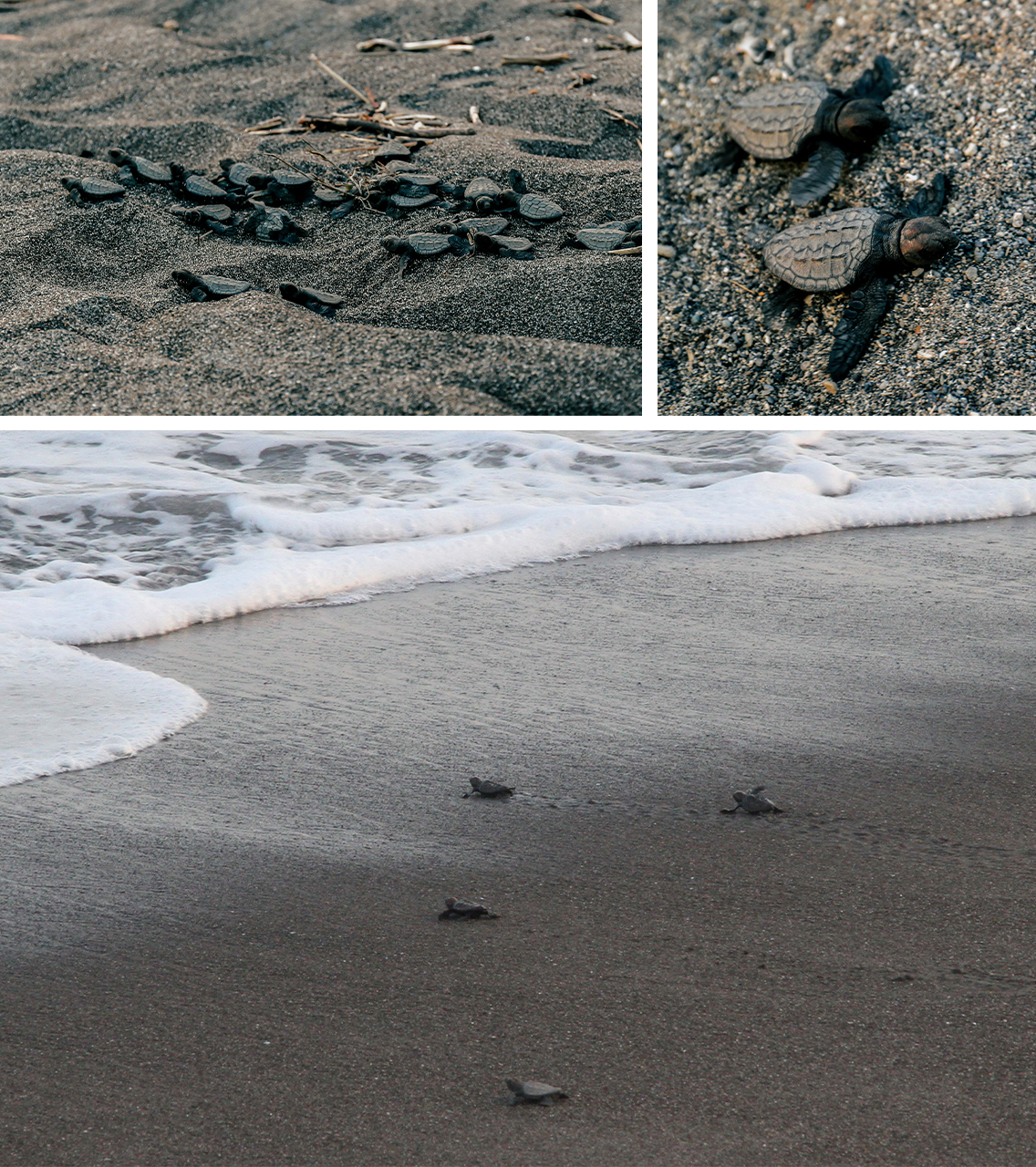
The eggs found on July 17 are now incubating in a corner of Tojo Beach.
When the babies emerge from the sand, they will be only about four centimeters in length (shell length). They will head out to the sea together, all at once, carrying on their backs small, leaf-like shells.
“The moment when we send them out to the sea is always moving. The turtles are all walking along the beach, flapping their flippers, being pushed by waves much bigger than them many times," says Yoshimura. “And yet they keep fighting back, and eventually, one by one, they disappear in the waves. I always wonder how such small hatchlings can live on their own.”
Only a few thousandths of a percent make it to adulthood. Once out at sea, the hatchlings ride the Kuroshio Current across the Pacific Ocean and to the coast of North America. It is said that some return to Japan.
“If we see them again in Japanese waters, it will be 10 years from now, maybe longer,” reveals Yoshimura. “Male sea turtles spend their entire lives in the ocean, and only the females come ashore. It would be great if the mothers of these turtles return to Tojo Beach someday.”
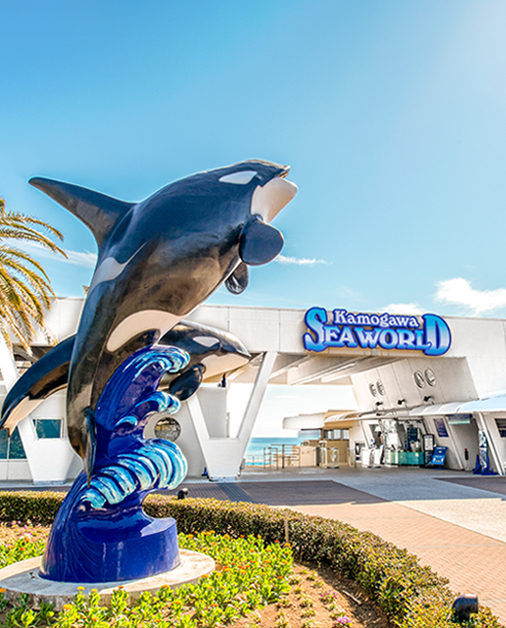
Kamogawa Sea World
Home to 11,000 river and sea creatures of 800 specie.
See the king of the sea, the killer whale, as well as dolphins, sea lions and four beluga whales in person. Performances are very popular! Enjoy a fun and healing time with your marine friends.
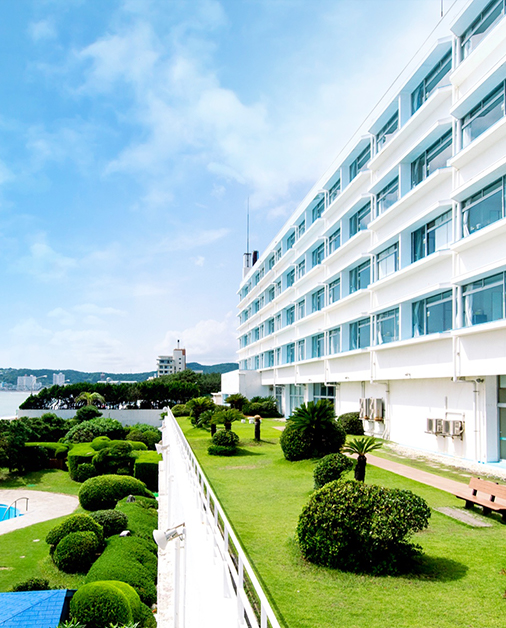
Kamogawa Sea World Hotel
A hotel directly connected to Kamogawa Sea World. All rooms have an ocean view. Kamogawa Sea World offers a range of facilities and services designed with families in mind. Guests can enter Kamogawa Sea World as many times as they wish for the duration of their stay.